


Measuring for indoor turf installation is a crucial step that can significantly impact the success and aesthetic appeal of your project. As a prominent indoor turf supplier, we understand the intricacies involved in this process and are here to guide you every step of the way.
Understanding the Basics of Indoor Turf Installation
Before delving into the measurement process, it's important to have a basic understanding of indoor turf installation. Indoor turf is a versatile and practical solution for various spaces, including residential playrooms, commercial sports facilities, and exhibition areas. It offers a low - maintenance alternative to natural grass, providing a consistent and attractive surface all year round.

Tools Required for Measuring
To accurately measure the area for indoor turf installation, you will need a few essential tools:
- Measuring Tape: A reliable measuring tape is the most fundamental tool. Choose a long tape, preferably one that is at least 50 feet long, to ensure you can measure large areas without interruption.
- Graph Paper and Pencil: Graph paper helps you to draw a rough layout of the space and mark your measurements accurately. It allows you to visualize the space and plan the turf installation more effectively.
- Calculator: A calculator is necessary for performing calculations, such as determining the total area and making adjustments for irregular shapes.
Measuring a Rectangular or Square Space
The simplest type of space to measure is a rectangular or square area. Here's how you can do it:
- Measure the Length and Width: Use your measuring tape to measure the length and width of the space. Make sure to measure from the longest points, following the walls or the boundaries of the area. Write down these measurements accurately.
- Calculate the Area: Once you have the length (L) and width (W) measurements, use the formula A = L x W to calculate the area. For example, if the length of a room is 20 feet and the width is 15 feet, the area is 20 x 15 = 300 square feet.
Measuring an Irregular - Shaped Space
Most indoor spaces are not perfectly rectangular or square. When dealing with irregular - shaped areas, you can break the space into smaller, regular shapes (such as rectangles, triangles, or circles) and then calculate the area of each part separately.
- Break the Space into Sections: Divide the irregular space into smaller, manageable shapes. For example, if you have an L - shaped room, you can split it into two rectangles.
- Measure Each Section: Measure the length and width (or other relevant dimensions) of each section. Calculate the area of each individual section using the appropriate formulas. For a rectangle, use A = L x W; for a triangle, use A = 0.5 x base x height.
- Sum Up the Areas: Add the areas of all the individual sections together to get the total area of the irregular space.
Accounting for Doorways and Obstacles
Indoor spaces often have doorways, columns, radiators, or other obstacles. When measuring for turf installation, you need to account for these elements.
- Measure Doorways: Measure the width and height of each doorway. If the turf will be installed under the door, subtract the area of the doorway from the total area of the room.
- Mark Obstacles on the Graph Paper: Mark the location and dimensions of any columns, radiators, or other obstacles on your graph paper. You can either cut the turf around these obstacles or, in some cases, subtract their area from the total turf area.
Considering Expansion and Seaming
When ordering indoor turf, it's important to account for expansion and seaming. Turf may expand or contract slightly due to changes in temperature and humidity. Additionally, if the area is large and the turf rolls are not wide enough to cover it in one piece, seaming will be required.
- Add Extra Width and Length: As a general rule, add an extra 2 - 3 inches to each side of the measured area to account for expansion. For example, if you measured the length of a room as 20 feet, order turf that is 20 feet 2 - 3 inches long.
- Plan for Seams: If seaming is necessary, plan the location of the seams in less visible areas. Make sure to order enough turf to cover the seams properly.
Special Considerations for Different Indoor Spaces
The measurement process may vary slightly depending on the type of indoor space.
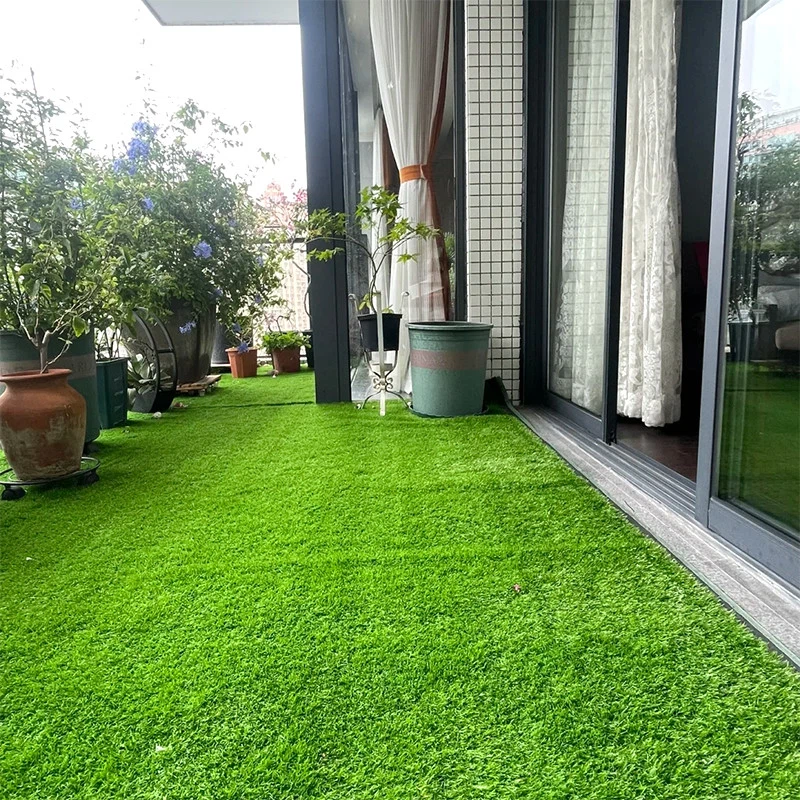
- Balconies: For balconies, you need to consider factors such as the shape of the balcony railing and any drainage systems. You can explore options like Balcony Artificial Turf, Balcony Rainbow Artificial Turf, and Balcony Customized Artificial Turf to meet your specific balcony needs. Measure the balcony carefully, including any corners or curves.
- Sports Facilities: In sports facilities, accurate measurements are crucial to ensure a professional - looking and functional playing surface. Consider the specific requirements of the sport, such as the size of the playing area and the location of goalposts or other equipment.
Double - Checking Your Measurements
Once you have completed the measurement process, it's essential to double - check your measurements. Measure the space again to ensure accuracy, and re - calculate the area. A small measurement error can lead to significant problems during installation and may result in additional costs.
Ordering the Right Amount of Turf
After you have accurately measured the area and accounted for expansion and seaming, it's time to order the indoor turf. Contact our team of experts, and we will help you select the right type and amount of turf for your project. We offer a wide range of indoor turf options, including different pile heights, colors, and textures, to meet your specific needs and preferences.
Conclusion
Measuring for indoor turf installation is a detailed process that requires careful attention to detail. By following the steps outlined in this blog, you can ensure accurate measurements and a successful installation. As an indoor turf supplier, we are committed to providing high - quality products and expert advice to help you achieve the best results for your indoor space.
If you are interested in purchasing indoor turf for your project, we invite you to contact us for a detailed consultation. Our team of professionals will assist you in every step of the process, from measurement to installation. Let us help you transform your indoor space with beautiful and durable indoor turf.
References
- "Artificial Turf Installation Guide" - Industry - standard guidebook on turf installation.
- "Indoor Sports Facility Design and Construction" - A comprehensive resource on designing indoor sports spaces with artificial turf.
